Auckland Winters Are the Best Argument for Outdoor Garden Lighting
Most people think about outdoor lights for gardens in October. The days are stretching, the deck furniture is coming out, and someone finally notices the garden looks good enough to show off after dark.
By then, they’ve already missed the point.
Auckland winters aren’t brutal in the way Queenstown winters are. No snow, rarely freezing. But they are dark — earlier than most people remember until it happens, and wetter than a summer-addled memory accounts for. By June, the sun is setting before 5:30pm. By the time most households sit down to dinner, the garden has been dark for two hours.
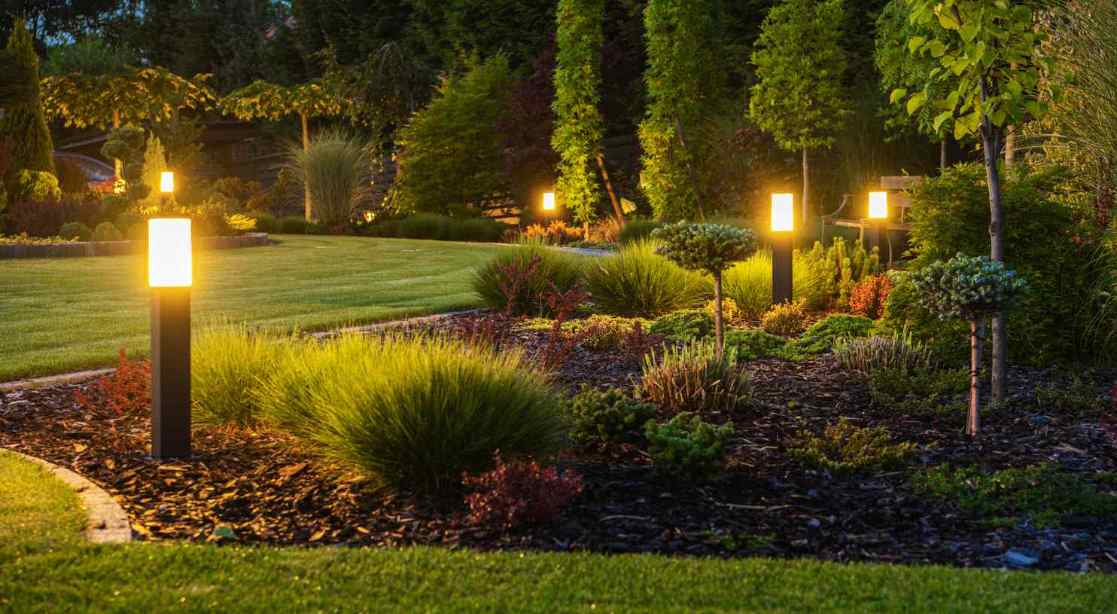
A well-lit garden in winter does something a summer-lit one doesn’t quite manage. It turns the inside of the house outward. The view through the kitchen window or the sliding door becomes a scene — trees caught in uplight, a path glowing quietly through the dark, the form of a garden that doesn’t disappear just because the season changed. It makes a house feel larger, more considered, more alive at exactly the time of year when the temptation is to shut the curtains and forget the outside exists.
What Auckland’s Climate Actually Demands From Outdoor Lights
This is where the NZ-made argument stops being marketing and starts being practical.
Outdoor lights for gardens in Auckland face a specific set of conditions that generic imported products handle inconsistently. High annual rainfall means water ingress is a real failure mode, not a theoretical one — IP ratings matter and should be verified, not assumed. The UV intensity through New Zealand’s atmosphere is among the highest in the world, which degrades plastics, fades coatings, and destroys cheaper polymer components faster than most product specifications account for. Coastal properties around the Waitemata and Manukau add salt air to that list.
Fixtures designed and manufactured specifically for New Zealand conditions carry these realities into the product from the engineering stage, not as an afterthought. The difference shows over time — not in the first season, but in year three and year five when a product either still looks right or has started to show what it was actually made of.
Low-voltage systems add another layer of practicality. Running at 12 volts via a transformer, they are safer around wet garden environments when correctly specified and installed—relevant in a country where “dry winter” isn’t a phrase anyone uses about Auckland. They sit under garden beds in flexible cabling rather than in rigid conduit, which means an established garden doesn’t need to be excavated to have lighting added or changed. And when a fixture eventually needs replacing — which, with a quality system, may be a decade away — the repair is straightforward rather than a project.
Where Outdoor Lights Auckland Homeowners Get It Wrong
The most common mistake isn’t buying the wrong product. It’s buying the right product and putting it in the wrong place.
Lighting a garden well requires thinking about what you’re trying to reveal, not just where there’s currently darkness. A spotlight aimed at a blank fence illuminates a blank fence. The same light angled up through a tree canopy creates something worth looking at. The difference between those two outcomes is positioning — and positioning is something that a printed instruction manual doesn’t cover.
The second mistake is treating the garden as a single zone. A path needs enough light to be safe. A feature tree needs a completely different quality of light — narrower, higher in contrast, designed to create shadow as much as illumination. An entertaining area needs something warmer and more diffuse than either. Running the same fitting type throughout produces a lit garden rather than a considered one.
The third mistake is underestimating how much the view from inside matters. Outdoor lights in Auckland gardens are looked at from inside the house for far more hours than they’re stood in. Designing a lighting scheme for how it looks when you’re standing on the lawn misses the audience that actually sees it most.
Frequently Asked Questions
Why should I choose NZ-made outdoor garden lights over imported alternatives? Primarily durability under local conditions. NZ-made fixtures are engineered for our UV levels, rainfall patterns, and coastal environments — conditions that degrade imported products faster than their specifications suggest. A long local guarantee, such as Garden Lights’ 3520 Nights of Light guarantee from a local manufacturer means something different from a two-year warranty on a product that’s never been tested in a Northland summer.
What’s the best time of year to install outdoor garden lights in Auckland? Any time — but autumn is underrated. Installing before winter means the system is working when it’s needed most rather than being commissioned in spring when the days are already getting longer.
How many lights does a typical Auckland garden need? It depends almost entirely on what’s in the garden and what you want to highlight. A small courtyard can be transformed by three or four well-placed fixtures. A larger property might use twenty or more. The number matters far less than the positioning and the quality of the fittings.
Do outdoor lights need maintenance? Low-voltage LED systems are low-maintenance by design. Occasional cleaning of lenses and checking cable runs for any garden disruption is generally sufficient. A quality installation from a specialist should run reliably for years without significant attention.
Can outdoor lights be added to an established garden without major disruption? Yes — it’s one of the main advantages of low-voltage systems. Flexible cabling runs under mulch or is shallowly buried, which means even a mature, planted garden can have lighting added with minimal excavation and reduced disruption to root systems .
The View From Inside
The garden you see through the window on a dark Auckland evening is the one that determines how the house feels for five months of the year.
Outdoor lights for gardens done properly don’t just illuminate what’s there. They make a case for the space — that it was thought about, that it matters, that the house doesn’t end at the glass on the first cold night of June.
That’s a different thing from leaving the porch light on.